When Creoles Collide
I used to be one big fan of Local Hip-Hop and I thought da genre deserved more attention in da world of academia.
I wen go present my papah “Hidden Pidgin: Da Absence of Pidgin in Hawai’i Hip-Hop” at da Association for Asian American Studies Conference on April 22, 2009 in Honolulu for one panel I wen chair called “Try Hold da Pidgin: Is Pidgin being Presshah-ed Out from Hawai’i Local Identity?”
Aftah da AAAS conference I wen submit my papah to Bamboo Ridge, but da ting got rejected. Sad face emoji, li’dat.
Aftah da conference I had childrens and nevah have time and money for keep up anymore with all da new music that wuz coming out. So I kinda just forgot about my essay until I ran into Thomas Iannucci da oddah year. Since we wuz talking about all tings Pidgin, I told ‘em about my papah and I wen show ‘em to him laters. Since I no wuz following da scene no more, I wanted for know if da points I wen raise wuz generally still true or what. He wen confirm that lotta da observations I made back in 2009 wuz still da same.
Using my essay as one jumping off point, Bruddah Thomas said he wuz going write his own personal essay for explore hakum he himself no use more Pidgin in his own Hip-Hop. I looking forward to reading his final draft. Should be deep cuz he one pretty akamai guy! —LAT
One time I wuz cruising in my office at Kapi‘olani Community College when two of my former students came by for talk story.
Both a dem wuz very much into da Local Hip-Hop scene. Da student who I going call MC Z. wuz one former Local graffiti artist and former aspiring rapper whose group wen disband aftah high school. His friend who I going call Fanboy M. liked for make friends with da Local emcees and he wuz such one big admirerer of graffiti art dat he always carried around his signature piece book for if by happenstance he met one graffiti artist in person. These two former students knew I liked Hip-hop so dey liked for stop by for bring some of da latest underground Local Hip-Hop CDs dey managed for get and we would listen to ‘em in my office. Dey always had da kine wea you gotta know da people who know da people for get ‘em, cuz wuzn’t available in any stores or even online.
When dey came in, I asked dem about their shirts cuz wuz one brand I nevah recognize. Happy dat I took a-notice dey proudly shared how dey wuz trying for start their own urban Hawai’i brand. Das when dey saw my cap and dey made faces like why you wearing dat brand for? I wuz wearing one Ainokea brand cap. Ainokea is one Local brand Da name’s one take off of da Pidgin phrase I No Care. So I asked dem, “Why, you guys no like Ainokea?”
Fanboy M. said “Nooo.” MC Z. said “Isn’t that like, the dumb moke brand?” And Fanboy M. threw in one scornful “Yeah” for signal his agreement wit his friend.
I thought wuz strange. Why all da sudden hate? Dey knew I talked Pidgin and I liked Pidgin, cuz I made dem read Pidgin stuffs for my Creative Writing class before. I knew both a dem wuz from o’hea so I asked dem if dey had for identify demselves, would dey identify demselves as Local. And dey both said dey would. And so we talked about Local culture. And pretty much dey liked everyting about Local culture, da food, da places, da aloha spirit, pretty much everyting except for Pidgin. Dey said wuz cool for oddah people to use it, but dey would try for avoid using it as much dey could.
In da back of my mind I wondered how representative these two students wuz. Cleary Pidgin wuzn’t dead for these students. Dey both had full Pidgin comprehensions. Dey could talk Pidgin dey said, but dey both tried not for buss ‘em out unless dey had to. Wuz like in their minds, if you Local, you can be down wit Hip-Hop, but you cannot be down wit Hip-Hop AND be down wit Pidgin. To dem dat wuz jus weird. I wuz jus weird.
Face Off: Pidgin v. Hip-Hop
I suppose in many Hawai‘i people’s minds-es Pidgin is not synonimous wit Hip-Hop. I dunno hakum, but da media likes for place Pidgin identity in opposition to Hip-hop identity. “The End of Local?” wuz da title of one article in da October 2002 issue of Honolulu magazine. Insai da article, reporter David Choo interviews Dr. Jonathan Y. Okamura from da University of Hawai‘i at Mānoa’s Ethnic Studies Department where Okamura asserts “we are losing our cultural distinctiveness.” One of da points raised is about how language stay changing. Choo’s summary of Okamura’s feelings is dat “In Hawai‘i beloved pidgin English has been diluted by hip-hop jargon.”
In one August 10, 2005 Honolulu Advertiser article on da release of Da Kine Dictionary, reporter Gordon Y.K. Pang wen talk to Local literature expert Eric Chock wea da article says “While [Lee] Tonouchi and others may consider the incorporation of words such as ‘phat’ into pidgin as part of an evolution, Chock said he doesn’t. . . Eric Chock, co-editor of. . . Bamboo Ridge, said some could argue that pidgin has been evolving so radically that it may not be considered pidgin at all.” In oddah words den, these experts on Hawai‘i’s Local is innuendo-ing dat Pidgin stay dying.
But I dunno if I would sign off on top dat coroner’s report so fass, ah. Perhaps da bess short story for illustrate da divide dat exists between da two worlds is Dianna Chung’s “Local Braddah and da Wannabe G” from da Hip-Hop Hawai‘i anthology. In da story da Pidgin talking narrator sees himself as “jus one Local braddah. You kno jus regular surf shorts ladat. And I get one big nose, but dat is da Hawaaawaiiian!” He sees one “local Chinese-looking guy” wearing “planny tick gold chains and da kine Sean Jean kine clothes.” In da Local Braddah’s mind, da guy gotta be putting up one ack, “I tink he wen tink he wuz black Da way he wen talk was someting fo laugh about. He sounded like one 50 cent wannabe.”
Aftah seeing da Wannabe G hit da girl he’s wit, Local Braddah steps in and tells da guy we go beef. But da Wannabe G has odda ideas, he wants to battle instead, “Mutha fucka you so stupid, why you messin wit me and my chick? Yo ear I will flick, you stupid prick. My rhymes make you sick.” Da narrator says “He was one bad rappa. And he kept rapping. So I just wen hit um.” When da cops come, da Local Braddah notices dat da Wannabe G switches gears, “Da next ting I heard he was apologizing to da cop and talkin in perfec English.”
Obviously da Wannabe G character can code switch between Ebonics and English. Wot’s interesting is dat in da end, aftah learning da Wannabe G’s real identity, Local Braddah says “I was trippen. Wat kine name is Alfonzo? And was kine Westcoast is Hawai‘i Kai?” So even though Local Braddah makes fun of da Wannabe G, Local Braddah can understand when Wannabe G stay talking, plus it too some Hip-Hop words like “trippen” have become part of Local Braddah’s vocabulary.
I know no mo’ no studies, so I dunno exackly how reflective of da Local population Local Braddah is, but das one-kine example of how you can have Hip-Hop vocab in wot linguist might say is one grammar das more Pidgin base.
But you say, oh what about Wannabe G. Wot’s going on wit him? Easy for be like Local Braddah and tell “he wen tink he wuz black,” in oddah words he jus frontin’. In 2002, I wrote my book Living Pidgin: Contemplations on Pidgin Culture. Inside I wen propose da idea of creating one Pidgin identity das separate from Local identity, cuz das wot seems like wot wuz already going on. I wen make da kine empirical observations dat get one sizable numbah of Local people who appreciate everyting about Local culture except for Pidgin. I asked da co-author of da book Pidgin Grammar, Kent “Yoda” Sakoda, who’s also da director of da Charlene Sato Center for Pidgin, Creole, and Dialect Studies at UH Mānoa wot he thought about Local people who try and distance demselves from da Pidgin and align demselves more wit English. Kent said “Dey in denial.”
For follow-up dis time I tried re-mixing da question little bit and dis time I asked wot about Locals who identify less wit Pidgin and more wit Hip-Hop. And so dis time Kent thought about ‘em sa’more before giving me his profound elaborations. Dis time he wen tell, “Dey allll in denial.”
Losing Our Binaries
Easy for jus dismiss da kine li’dat as fake cuz it keeps our binaries in tack, ah. Local vs. Non-Local. Pidgin vs. Hip-Hop. But whyzit li’dat? How come no mo’ room for Pidgin in dis newer Local Hip-Hop identity?
For try get one bettah understanding I wen turn to world Hip-Hop music. I do one exercise on authenticity and representation wit my Hawai‘i Pacific University students. (I did ‘em once for my special one-shot Anthropology 3880-A: Hip-Hop Hawai‘i: Hawai‘i Youth Culture class and I do ‘em for my English 3203: Pidgin Literature classes dat I teach regularly).
I play for dem clips of international Hip-Hop music from all ova. And I make dem do one matching game wea in groups dey gotta discuss and try match da song wit wea dey tink is da country of origin for da artist or group. Den I have ‘em discuss how dey managed for come up wit their answers.
For example, dey deduce dat da song “Ladji Kabako,” (of course I no tell ‘em da titles, cuz I no like give ‘em extra clues), but dey guess dat da mystery song gotta be Yeli Fuzzo from Mali, West Africa because da sound reminds dem of da music from Disney’s Lion King. Da next song “Mortel Poison” dey say is one gimme—gotta be IPM feat. Arsenik from France, cuz why? Cuz dey talking French, so like no duh. Da next chree is little bit mo’ challenging cuz in all da songs dey talking English, but my students is able for figgah out dat “Lost in Words” is Scary Eire from Ireland, “How’s Life in London?” is da London Posse from da U.K., and “Feline Forces” is Trey & Beats R Us from Australia cuz my students say dey can differentiate between da diff’rent English accents.
Dey can even distinguish between Japanese and Okinawan. Kakumakushaka’s “Annetai” get samplings from Okinawan folk music and couple students even recognize some Okinawan vocab. Da song “Tokyo Drift” by Japan’s Teriyaki Boyz my students can figgah out dey say because some of da lines is in Japanese, sounds like get taiko drums, plus it too get references to Tokyo.
So basically da students say dat da key indicators is language, place references, along wit da musical beats and instrumentations. At dis point my students is all confident and eager for play da next round. So I tell ‘em we playing round two, but I no tell ‘em dis time going be cross cultural Hop-Hop.
Confusion—or Profusion?
Round two gets all my students frustrated. For da song “Beyrouth Ecoeuree,” how can dey guess Clotaire is one Lebanese in France. He speaks about war torn Beruit and he incorporates da arabic flute and vocals. So my students look for Lebanon as one of da answers, but no more dat as one of da choices. Dey no can guess too, da Sultan Tunc song “Deliloy.” Sultan Tunc is Turkish but he wuz born in Germany wea get one large Turkish immigrant community. Puzzling.
Dey figgah out da next one must be Indian, but wea’s India on da choice list? Turns out da Sona Family is from da U.K. and are actually British Indians. “4 Sho” get planny Japanese lyrics, but no more Japan on da list too. Das cuz Kapital is from Japan, but she moved to da US as one teenager. One of da most difficult ones for guess is da song “Esperanza” by Daara J. featuring Sergeant Garcia. Da song’s music sounds Latin, but da answer is Senegal, West Africa. Da song is actually one Cuban colab. Latin music is extremely popular in Dakar. Daara J. met Sergent Garcia while playing in Europe, so dey flew him and his band to Africa for record da song wit dem.
My initial question to my students of how you represent wea you from wuz clear cut to dem before. But now all my students stay tinking. Gee, wit people and music moving around, dis question of identity is all complicated now.
Den we get to Hawai’i Hip-Hop. Most of my students not familiar wit any Hawai’i Hip-Hop when dey come to my classes. (About 1/4 knew some for my special Hip-Hop Hawai’i class, but pretty much nobody knew any in my Pidgin Lit classes.) I ask my students for try tink about everyting we went over, get in groups, den try come up with their definitions of wot constitutes good Hawai’i Hip-Hop.
For get dem tinking, I ask dem questions. If you not Native Hawaiian, wea you represent? Do you represent Hawai’i or do you represent da homeland(s) of you and your immigrant ancestors? Do you haff to be from Hawai’i for rep Hawai’i? What about if you’re Hawaiian, but not from Hawai’i? Does good Hawai’i Hip-Hop haff to get its roots in Hawaiian music traditions? What about language—Hawaiian? Pidgin? Da language of your culture? Even if you no speak ‘em?
How Hawai‘i Is It?
Once my students come up wit their one-sentence definitions of what constitutes Good Hawai‘i Hip-Hop, I play for dem one wide range of samplings from Hawai‘i Hip-Hop music. I ask dem discuss wit their groups as dey classify each artist as “Doesn’t Represent Hawai‘i,” “Represent Hawai‘i Li’lo Bit,” or “Good Representation of Hawai‘i Hip-Hop.”
Turns out get lotta Hawai‘i Hip-hop artists’ songs dat students score low cuz dey say if I nevah tell dem, dey wouldn’t nevah guess dat these artists is from Hawai‘i. Dey say these songs sound like generic party or generic gangsta songs dat could be anybody from anyplace. I not going say which songs is da ones dey wen diss.
For most of my students, da majority of all da songs I play winds up in da middle category as represents Hawai‘i somewhat. If da music sounds regular Hip-hop den students turn to da lyrics wea dey on da lookout for Hawai‘i vocab words in one Hip-Hop context. Dey appreciate ‘em when da artist drops some Local place references or maybe da occasional Hawaiian and/or Pidgin word or phrase. For examples, in Nomasterbacks’ “Aloha, Mahalo,” even though da music is more 70’s Funk inspired, still yet get da chrous dat repeats “Aloha, Mahalo, Nomasterbacks is a hard act to follow,” so students say da song reps Hawai’i at least little bit.
One noddah song dat students score in da middle is “Jibba Jabay” by Kutmaster Spaz wea he drops phrases like “Waikīkī punani,” or “mixing flavors like adobo, laulau, and chop suey.” One particular song dat get choke planny place references is Big Teeze’s “808 Hoes.” Da song begins wit Big Teeze telling what his song going be about, “This is a story of 24 hoes. . . from Hawai‘i.” Out of all da songs, dis song probably get da greatest numbah of Hawai‘i place references of any song eva. Da first verse begins “I fucked this bitch from Pearl City, a little ass shorty with some big ass tits. I met this freak from Kaneohe. I asked her if she wanta fuck she said okay. Fucked this bitch from Salt Lake. I really love the way she make the booty shake. Said I met dis bitch living up in Kona, she was sipping on her coffee and licking my bone-a.” And so da song goes on for drop 20 more place references.
Obviously sheer quantity of place references isn’t enough in students’ minds for push da song up higher than da middle grouping. Plus da fack dat da song re-enforces da stereotype dat Hawai‘i girls is one easy “lei” leads us for believe dat spreading one positive and truthful Hawai‘i message is also one important criteria for students when anointing someting as one good representation.
But having one positive message alone isn’t necessarily enough for get one song da highest classification. Lotta songs have one message of Hawai‘i pride like Emirc’s “Honolulu.” Da song goes “They all thought we living in shacks, ripping their tracks, so watch doc, we’re stitching it back. Throw your H’s up in the air, keep ‘em sky high, reppin’ the H a w a i-i.” Still yet even wit da positive message, students still rate ‘em da same Hawaii-ness as da song from Big Teeze.
Songs dat talked about serious issues dat affeck Hawai’i also scored in dis middle grouping. Like Hunger Pains w/ Creed Chameleon’s “Rock Ice” which talks about Hawai‘i’s ice epidemic. “See cats in Hawai‘i man, they love the rock ice. Not the bling, but the white rock for the right price.” Or Kamehameha Projects’ song “What You Know About,” which gets points for its pro-Hawaiian Sovereignty message “What you know about upsidedown flags, kupunas who never had, their share of ceded lands.”
Students say dey like songs like IA’s “Shaka” cuz it teaches outsiders about Hawai’i’s customary handsignal greeting dat sez howzit, and not, call me up later. Punahou school marching band, “Throw a shaka at yo boy. What up cousin? Yeah. It be the H.I. best kept secret. It be the H.I. Hip-Hop rocka. Nice flow, I.A. Gotcha. Another sic beat, O’sna’ Gotcha. Hands in the air. Everybody throw a shaka.”
Searching for the Hawai‘i Sound
Essentially students like songs whose lyrics share someting of da Hawai‘i experience. But apparently students require more than jus Hawai‘i lyrics in order for dem for say someting is one good representation of Hawai’i Hip-Hop; dey searching for da Hawai‘i sound too. But Hawai‘i inspired-music alone is still not enough for get students for say it reps Hawai‘i good. For example, da Rondo Brothers’ “‘Ukulele Poo-poo Platter,” is one song about one guy who sleeps around. And besides da line dat repeats “My mind is like an ‘Ukulele Poo-poo platter,” da song doesn’t seem for really talk about Hawai‘i.
Interestingly, students say da ‘ukulele-like lullaby music fused wit rap beats and da lap steel strumming evokes one feeling of one gentle breeze in paradise, but it sounds more like how Hollywood or outsiders would depict Hawaiian music. (Das one interesting comment cuz da Rondo Brothers is from da Bay Area.)
Da artist Spookahuna also has one song dat incorporates some Hawai‘i musicality. Spookahuna and Terry D’s "On Da Sandwich Isles" kinda has one Hapa-Haole, Tin-Pan Alley-like melody dat stirs up memories of old Territorial Hawai‘i. In da song, Spookahuna tries for correck some of da stereotypes about Hawai‘i “I bet you thought we were savages, scavenging our food from the animals, travelling, paddling canoes and we’re cannibals, inhabitants, tattoed from my head to toe, but actually it really isn’t true.” Even wit some musicality and good intent, it’s still hard for get unanimous approvals of goodness from my students for Spookahuna.
Sudden Rush!
Perhaps in students’ minds-es da Hapa-Haole Hawaiian sound is more associated wit da kine music dey play for tourists, so even though it is part of da Hawai‘i music tradition, maybe it’s not “authentic” enough for dem. So I guess ees not surprising da group dat always scores high wit da students is Sudden Rush.
Almost all my students say Sudden Rush is one good representation of Hawai’i Hip-Hop. For da ones who recognize, dey like how Sudden Rush pays tribute to Hawai‘i’s rich musical traditions. Like da song “Can You See Me Now (Hawaiian I’z),” which blends Sudden Rush’s rap wit Jon Osorio and Randy Borden’s 1981 Hoku award-winning song “Hawaiian Eyes.” Dis Sudden Rush rap remix pays homage to all da Hawai‘i performing artists who came before dem, “Somehow, someway, this is going out to all of our musicians who have passed away. What. For those who paved the way. Right. You gave mana‘o for musicians who are here today.”
One noddah one dat pays homage is Sudden Rush’s Hip-hop rendition of Hawaiian slack key legend Uncle Gabby Pahinui’s “Hi‘ilawe.” And den get Sudden Rush’s colab wit Na Waiho‘olu‘u O Ke Anuenue. Wit English and Hawaiian rap lyrics dey remix “Kaulana Na Pua,” one traditional Hawaiian song composed in 1893 for protest da overthrow of Queen Lili‘uokalani.
“Ea” Rocks, Money Walks
Music critics say dat in da 1970’s Sunday Mānoa’s fevered ‘ukulele version of da traditional song “Kawika” for King David Kalākaua ushered in da modern age of Hawaiian music. Sudden Rush takes dis song and amps ‘em up even more in their pro-Sovereignty song “Ea,” in making their musical statement for da Hip-Hop Hawai‘i age.
But my students’ mostest favorite is Sudden Rush’s “Paradise Found.” Students like how Sudden Rush manages for incorporate Hawaiian chant into da song. And students gave dem props for even being able for include one voice sampling of Hawaiian sovereignty leader Haunani-Kay Trask. Word up.
Since Sudden Rush is their artistic favorite, I ask dem wot going happen if we try change da footwear. Wot would happen if we put dem in somebody else’s slippahs? For try get one different perspective I ask my students for put demselves in da slippahs of da record label now. If dey wuz no longer idealistic listeners and if dey actually had one bottom dollar dey had for look out for, who would dey sign to their record label.
Den comes interesting for see how their viewpoints change, brah. Their definitions of good is no longer who’s good artistically, but who might sell good. Many chose NOT for sign Sudden Rush cuz dey say da group no mo’ da wide appeal necessary for make their company enough money. Da majority of students decide for take da middle ground and go for artists who at least represent Hawai’i little bit, sukoshi kine. Couple times one group would resolve dat dey would STILL sign Sudden Rush, cuz dey wanna put out good artistic music, but dey decide dey would ALSO sign couple-few more commercial artists for at least help balance out their books.
For my classes we read newspapah articles on how Local Hip-hop artists complain dat it’s hard for get Local airplay if your stuff no sound Hawaiian or Jawaiian. I ask my students, so if hard for Local Hip-Hop artists for get Local airplay, den who’s their audience den? Does dat explain how come get planny songs we heard dat only reps Hawai’i little bit or not at all? And why is Sudden Rush like how dey are den?
I ask my students how does da audience factor in to da kine music das being produced. And we try examine some of da motivations behind da creation of da music. We read over some background informations on Sudden Rush. We see how spreading da message of Hawaiian Sovereignty is important to dem. Plus it too some of dem stay involved wit da Hawaiian language immersion programs, so we see how da Hawaiian culture is part of da core values das primary to dem.
Students agree dat Sudden Rush is probably da rare exception den. Dey say it’s natural no more so much groups doing full-on Hawaiian rap cuz da numba of people who full on proficient in da Hawaiian language AND who get MC skills is probably not dat great.
Wea’s da Pidgin?
But my students ask, Wot about Pidgin? Wea’s da Pidgin? Some linguistic experts estimate dat ova half da population of Hawai‘i’s first language is Pidgin. So whyzit Hawai’i Hip-Hop no mo hardly any Pidgin, only get sprinkings hea and dea for flava. So togeddah we try figgah out how come. Why is dea one absence of Pidgin in Hawai‘i Hip hop?
Some students conjecture, maybe it’s impossible for combine. I anticipated dis answer so I point out dat before people started rapping in Chinese, dey said wuz impossible, but den dey did ‘em eventually. Previous I wen ask one Local Hip-hop DJ from da college radio station da same question and he speculated dat perhaps da beats of Hip Hop is different from da rhythm of Pidgin, so ass why hod for fuse.
I wen turn linguistic expert Kent “Yoda” Sakoda again for see if he thought if dis wuz true. For help Kent out I let him borrow my Art of 9 Bars DVD, and he borrowed ‘em fo’ one really long time. Wuz like almost borrow and no geev back, brah. Aftah contemplating for forevah and a day, Kent finally decided dat he nevah see da rhythms and inflections of Pidgin as being any kinda barrier.
So I asked him for da proof. I toll him go gimme da demonstrations, but he wuz reluctant for buss out some Pidgin rhymes for me. Wot? No aloha… from Sakoda. I wuz all ho, brah!
I tease Kent, but even though he no more da kine mad rhyming skills, he’s right. I point out to my students dat Pidgin get one strong association wit Hawai’i comedy and perhaps da only full-on Pidgin rap songs going come from Local comedy. Maybe one of da firstest Pidgin rap song is “Try Wait” by The Muu Muus and The Pupus off their Living in Parodies album.
But probably da most well known one dat got planny radio airplay is “B-R-A, Bu Rap Attack” from Local comedian Bu La‘ia’s debut album False Crack. Da song starts off li’dis, “Wassup, wassup. Wassup everybody, have no fia, cuz everybody’s Unco Bu La‘ia is hea. Wit da rap for da people of da Hawaiian nation, stay in school and get one ejumacation. One creation of da Hawaiian isle, I always get da chicks cuz I get da mean style. Wanted to be governor but dey no let me run, becuz dey all sked of da Ha-why-an. Mahalo to da people who wen vote for me, I nevah lose money like da Jap and Portagee. Not one Popolo, but braddah Bu can rap, get one app fo’ Michael J, but at least I nevah snap.”
So for da whole song, Bu La‘ia proves you CAN rap all in Pidgin.
So hakum no more planny Hawai‘i guys rapping in Pidgin den? Since Kent Sakoda co-wrote da Pidgin Grammar book, I would argue dat he would argue dat maybe lotta people still no yet know Pidgin is one language. If dey tink of Pidgin as jus slang den maybe it jus seems more instinctual for sprinkle Pidgin words into one Hip-Hop base. And so maybe if more MC’s read Kent’s book and dey started for view Pidgin as one language in its own right, den maybe having dis knowledges might affeck da kine work dat dey produce. For find out if das going have any affeck, Kent bettah try hustle and get his book more out dea.
My tinkings is maybe Bu La‘ia can rap in Pidgin cuz he’s one comedian, so he’s allowed to, by da rules of societal conventions. Cuz planny people still tink dat Pidgin is ony good for talking story and joking around and not for any kinda serious art or creative expression. An if we make da parallel to Local literature we see dat generally speaking, Pidgin in short stories and poems nevah appear in serious complex ways from day one. Insai my Pidgin Literature class we study how get one progression of Pidgin in da literature. Most of da early Pidgin dat appeared in print wuz used for jokes and humor. Den eventually writers started using ‘em as part of da dialogue for da minor characters for give their stories some Local flavor.
Pidgin Only Fo’ Fun?
Den in da 70s wit all da cultural re-awakenings das going on in Hawai‘i, we start for see serious poetry being published in Pidgin. And we see Pidgin coming to da forefront in staring roles wea dey da narrative voices of main characters in short stories whereas befo’ dey wuz relegated to being jus da Pidgin background characters. But even though we get all dis Pidgin progress still yet get lotta Local people who no even know we get one Local literature. So maybe da idea of Pidgin rap is jus someting dat serious rap artists nevah even tink to consider. Until da consciousness changes, generally people is still going continue for tink Pidgin is only fo’ fun.
Some students guess dat gotta be for conscious marketing reasons, das da reason why no mo’ Pidgin in Hawai‘i Hip-Hop. Dey say maybe Bu nevah care if he got airplay beyond Hawai‘i, but dey tink young Hawai‘i Hip-Hop artists do. Students tink most likely gotta be dat Local rappers wanna make da big bomboocha bucks and land one phat “mainland” record contrack. But going back to my Local literature parallel, I ask, if nevah have Local presses in da 1970’s who would publish da Pidgin lit, how much Pidgin would’ve been written den? Same ting now.
Maybe, might be catch-22 too for Hawai‘i Hip-Hop music. Maybe Hawai‘i Hip-Hop no get Hawai’i airplay cuz lotta da songs no really rep Hawai‘i.
But by dat same token, maybe dey know dey not going get airplay so das da reason dey create songs das going appeal to da “mainland.” Cause-effeck, we dunno. Ho das deep, ah? I dropping science, brah.
Oddah students figgah, maybe it’s jus not who dea are. Maybe dey jus no talk Pidgin. I suppose you could stalk all da Local peoples who identify wit Hip-Hop and follow dem around all day. Kent Sakoda tinks if we follow around all da Local people who claim not for talk Pidgin, we bound for “catch” dem talking Pidgin at some point. But since Kent’s methodology for gathering data is da kine GO JAIL, brah, I can only present as evidence my two students I talked about at da beginning, MC Z. and Fanboy M. For MC Z. and Fanboy M, da casual observer might tink dat dey no talk no Pidgin, but cuz I know dem, I know their Pidgin stay dea, if you dig deep enough.
So hakum no more so much Pidgin in Hawai‘i Hip-Hop? Could be cuz people no view Pidgin as one language and as as one means of serious lyrical expressions. Could be cuz artists for wotevah reasons target one “mainland” audience. Could be too, maybe it’s jus hidden. Maybe MC Z. and Fanboy M jus need one role model for show dem it’s not weird. And maybe already get. Maybe da model already exists. Maybe get one serious hardcore Hawai’i Hip-Hop group rapping in full on Pidgin someplace. But maybe dey jus not on da radio, or on top one CD, or performing at big shows. Maybe dey still waiting for be “discovered” someplace in somebody’s garage or insai cyberspace.
But specu-ma-lations aside, me and my students all agree dat for now Pidgin stay hidden for da most part in Hawai’i Hip-Hop. And we all agree dat it ony takes one spark. If dea’s one breakout totally legit Hawai‘i Pidgin Hip-Hop song dat scores it big, den das gonna be da model for show, you can flow, in Pidgin.
Presented at the 2009 Association for Asian American Studies Conference: “Try Hold da Pidgin: Is Pidgin being Presshah-ed Out from Hawai‘i Local Identity?”
Lee A. Tonouchi Chairman and Presenter
April 22, 2009
Image by Bruno Guerrero.
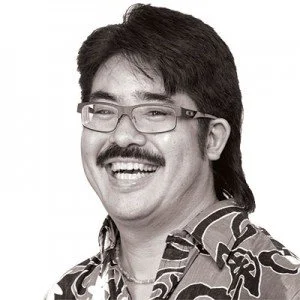
Lee A. Tonouchi wuz recently appointed Hawai‘i’s State Poet Laureate for one chree-year term. His Pidgin poetry collection Significant Moments in da Life of Oriental Faddah and Son wen win da Association for Asian American Studies Book Award. His children's picture book Okinawan Princess: Da Legend of Hajichi Tattoos wen win one Skipping Stones Honor Award. An'den his play Three Year Swim Club wuz one Los Angeles Times Critic's Choice Selection. He recently wen go do his first play adaptation with Two Nails, One Love, based on top da novel by Alden M. Hayashi, which runs at Kumu Kahua Theatre until February 22, 2026.