Romance, Interrupted

Everything to the Sea by Alicia Upano isn’t quite a romance, but love is undoubtedly at the heart of this unique tale of disaster, grief, and community.
The story follows the relationship between aloof Jane, who never quite fit into small-town Hilo, and grounded Kenji, who never dreamed of anything beyond it. The moment that the two reconnect as adults, sparks fly and they become inseparable. When Jane returns to Oʻahu to resume her studies, Kenji takes a leap and follows.
And then the wave hits. Nothing will ever be the same again.
In a moment, Kenji and Jane lose everything: Hilo is underwater and with it, everything they’ve ever known. While Kenji returns home to help rebuild his community, Jane runs from her grief and doesn’t look back. Years later, fate, brings the two together, giving them a rare second chance at love. But to stay together, Jane and Kenji must confront the ruins of their relationship and their lost home.
Alicia and I have the pleasure of sharing a publication year. The Killing Spell was released back in April and now Everything to the Sea is set for July. As my book tour is winding down, Alicia’s is ramping up. It’s been frantic, but we set aside some time to chat about the importance of finding love in times of crisis, and the belief we have in the community of Hawai‘i nei.
—Shay Kauwe
An Interview with Shay Kauwe and Alicia Upano
SHAY KAUWE
As much as your book is literary, I really do consider it a romance as well. What do you think about the exact genre specification of Everything to the Sea?
ALICIA UPANO
It’s funny because it is a disaster story, but truly the romance between Kenji and Jane is what attracted me to this concept. When it comes to disaster stories the focus tends to be trauma or hardship. There is a hardship in this book, but it’s mostly a hardship of character versus a hardship of environment.
I loved hearing that you would classify this as “a love story but not a romance.” I think so, too. Because in some ways the love story is a bit of a Trojan horse for the larger story I want to tell, which is a story about grief.
My editor had a very keen sense about the way she wanted people to enter the story, in a more straightforward way, with stereotypical romance beats. But once the wave hits, that changes, and that’s where I felt like that it became my story. Things get hella complicated, you know? The joy of new love complicated by real life circumstances.
SHAY
Is there a reason why the messiness is attractive to you? Because it’s a very messy love story.
ALICIA
It is a messy love story! I think the easy answer is I’m not very good at plot. [laughs] When something as awful as what happens to these two characters occurs, the story really is about the ways in which they are trying to both grow individually and together. That’s messy work.
SHAY
So, this is a question to satisfy my own curiosity. Do you believe in soulmates? Do you think that Kenji and Jane are soulmates, or is it something different that you’re exploring here?
ALICIA
That’s a great question. I think that though real-life Alicia doesn’t believe in soulmates, Jane and Kenji might be soulmates in the fictional sense. What I mean by that is that they have tried to go on with their lives after the tsunami without the other person, and no one else can quite fill that void. And what is a soulmate if not that?
They each have something that the other needs, but they’re never going to be able to enjoy that in any real way until they deal with everything that’s come between them.
Do you believe in soulmates?
SHAY
I believe more in like, destiny bringing people together, and then like the opportunity is there for you to take.
ALICIA
Absolutely.
SHAY
That actually fits the story well, though I don’t know if I’m just viewing it through my own lens of how I want to see it.
ALICIA
Yeah, because you must believe that the characters—the lovebirds in my book, the lovebirds in your book—they could find other people.
SHAY
Exactly. I strongly believe that you don’t necessarily end up with your soulmate. Like you can have a soulmate and not be with them but still have a very happy and fulfilling life. And that might be better for both of you. So, I don’t know, it's complicated. Love is messy.
“Running away is a response. And I’m not sure that there is a ʻright’ response in that kind of situation.”
ALICIA
Yeah. I think that for Jane after the wave, the thing that makes Kenji such an important person to her is that he represents home. Maybe we can think about this idea of soulmates as who can embody home for us, who can reflect it, who can deepen it for us, who can make us feel that no matter where in the world we are, we are home.
SHAY
Oh my gosh, that’s great! That’s a good segue into something that I really like about Jane as a character, because she is described as “not your typical local girl.” And I was curious why you decided to approach it like that.
ALICIA
Totally. I think that, like Jane, I also didn’t feel like I fit into a stereotypical local girl image. I was an art freak. I hung out with all the weird kids. There’s a way in which I think local culture is so prevalent here that you can feel like an outsider if you don’t align with that, but it doesn’t mean that you’re less a part of this place just because you might express that differently. Jane embodies that for me. She’s a bit of a weirdo. She’s not Miss Aloha. She doesn’t feel like she belongs, so she casts all her desires outward.
I think that’s a young person’s move, right? To not understand the nuance and offerings that you have at home, and rather just think that it’s out there in the world.
SHAY
Okay, I wanted to ask a little bit more about your characters and give you an opportunity to defend Jane and Kenji. What do you think are their biggest weaknesses as people, and are these characteristics in the story inhibiting them from being together?
ALICIA
Very early on, I decided that Jane’s journey would take her from being selfish to selfless, and that Kenji’s journey would take him in the opposite direction from being selfless to selfish. And you can see why that causes a lot of problems between two people. Jane defines herself through her ability to build her own life. She has a very stereotypical Western journey outward into the world. Whereas Kenji is very much a local boy. He finds his stability within the family unit and serving at home, but of course, he’s also a man who has his own desires. When he meets Jane, he has permission to choose himself, in a way. But when the tsunami hits, he reverts to his basic nature, which I think is the right thing to do during a time like that.
But I think there’s a question about Jane’s abrasiveness, too. I’ve been asked about Jane, is Jane a likable character? Why is Jane so selfish?
SHAY
I actually find her—maybe not likable—but I understood every decision that she made. The decision not to return home for example, which I think Kenji saw as a huge betrayal of their connection, I felt was a very natural and normal response. It was a way of dealing with grief. Running away is a response. And I’m not sure that there is a “right” response in that kind of situation.
I think that’s what makes the story so compelling, because I don’t think any of their decisions were cruel at any point to the other person.
ALICIA
I think they’re trying to preserve themselves during a very heavy time.
SHAY
I was also curious about the tsunami. Is there a reason that you chose a tsunami particularly? I'm asking because we all know about the big ones that happened in Hilo, so knowing the history makes sense, but why this natural disaster of all the ones that happen in Hawaiʻi?
ALICIA
To answer that question, I think I need to tell you a about how this story came into being. Originally, I was working on a novel that had to do with climate change in Hawaiʻi, and I was interested in all the ways in which the environmental toll would affect us here. It was set in the future with a very different cast of characters, and there were these two minor characters, Jane and Kenji, who had lost their families in Hilo. They were older in this other novel and in some ways, they were emblematic of the natural disasters and the losses that people in Hawaiʻi had already suffered. I was imagining them kind of as the elders of this new generation that was dealing with climate change.
What happened was I just kept writing about Jane and Kenji. I only wanted to write about them, and their backstory, about how they met, how they grew up in Hilo, and how they lost their families and grieved. So, somebody suggested, very wisely, that that was the book I was writing and not this other futuristic climate change story.
And obviously Hilo, with its background of tsunamis, made sense. Tsunamis are the most devastating. I mean it’s comparable to an asteroid collision or a nuclear explosion.
SHAY
So, I understand why you wrote the book in terms of this idea. You pivoted to focus on the characters that you most connected with. But what is something that you really hope a reader takes away from the story overall?
ALICIA
My hope is that this is a big-hearted book. Ultimately, I think the characters are flawed and complicated, and people will have big opinions about them—but I hope that we see that even under the worst of circumstances, we can rebuild. And that other people are part of that. It brings meaning to our lives. It’s a little trite, but it’s also true.
SHAY
I love that.
ALICIA
I did make a specific choice to have Jane and Kenji work in architecture, construction, and art because the tsunami obviously levels their hometown and, specifically, their family homes. They both work in ways that have to do with shelter. Jane’s work is about designing buildings, and Kenji’s is all about building them, creating them. This book is a lot has a lot to do with the ways that we create even amid destruction.
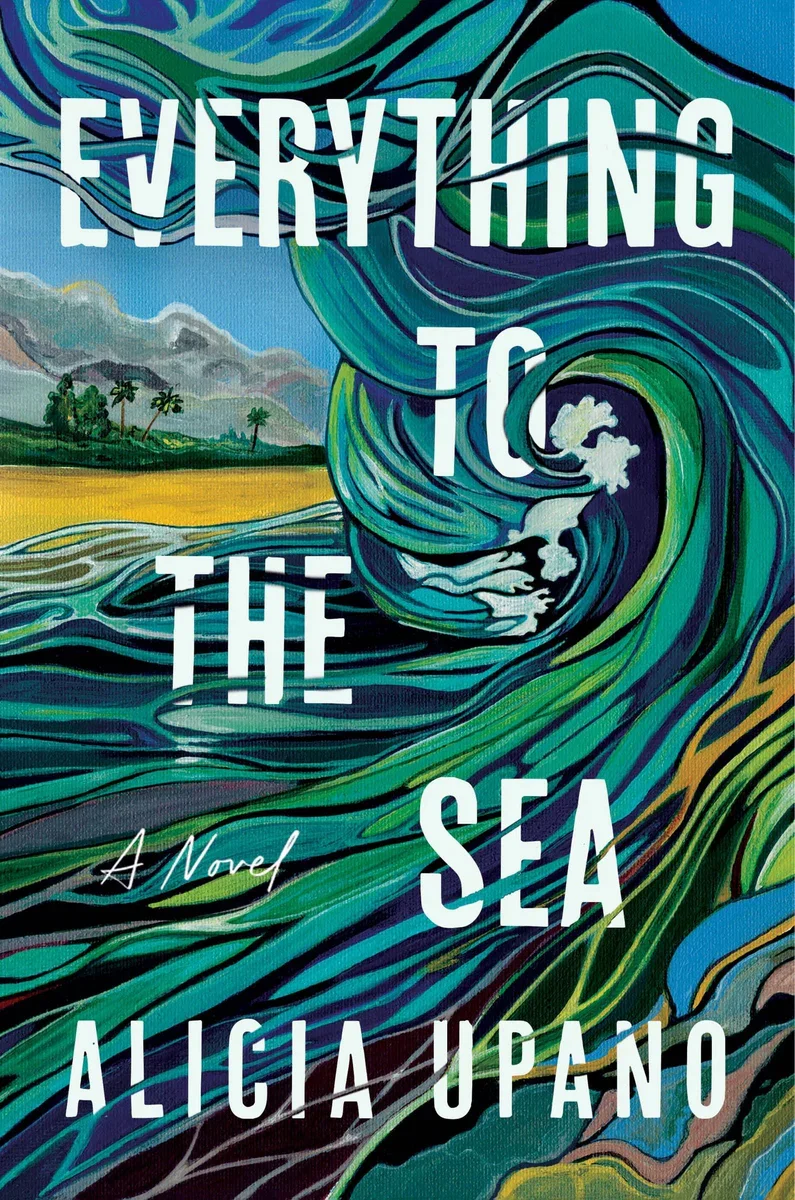
Everything to the Sea is now widely available at local bookstores and online. Join Alicia at readings, signings, and workshops on Kauaʻi, Hawaiʻi island, Oʻahu, as well as several stops on the U.S. West Coast. Dates can be found at aliciaupano.com/events.
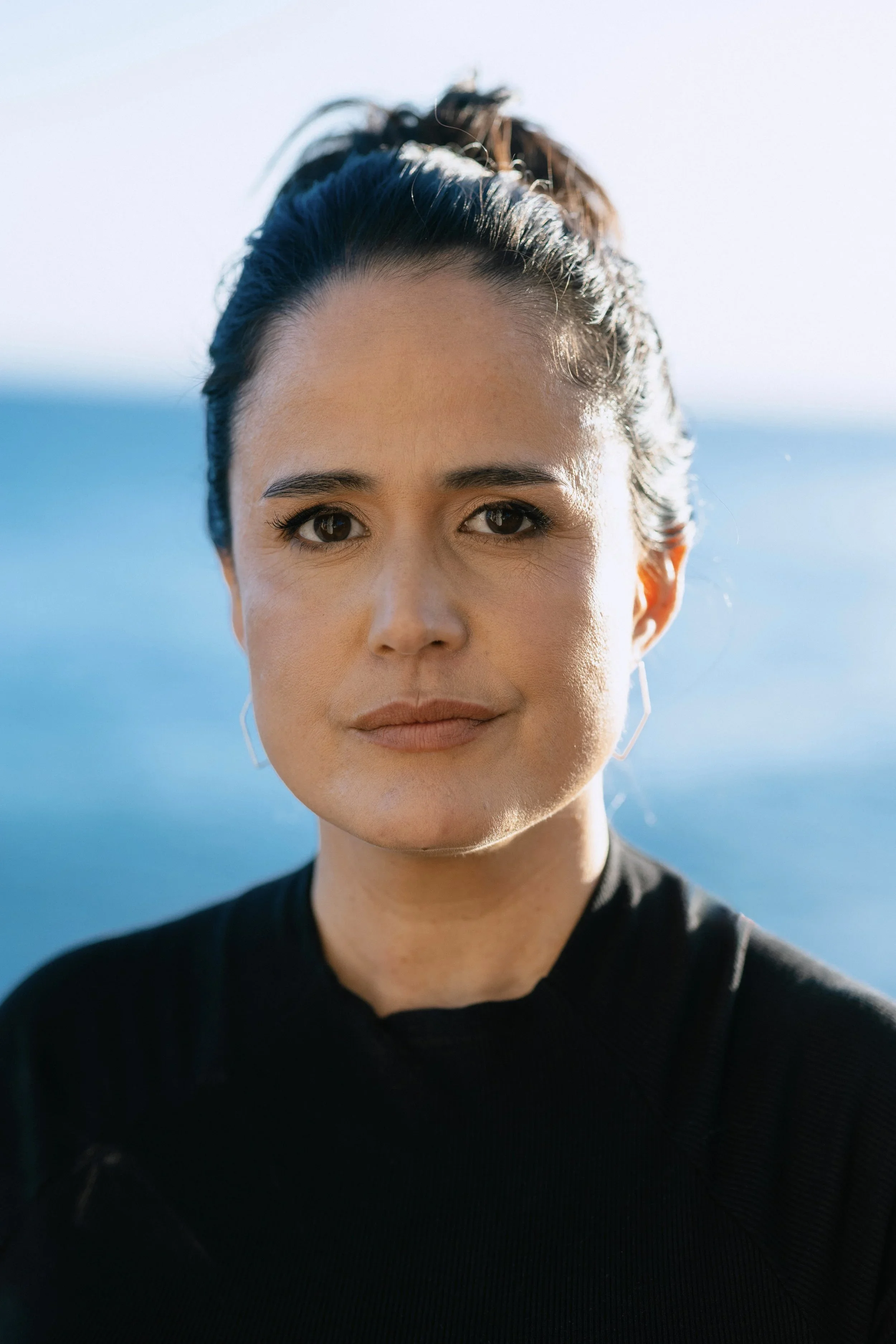
Alicia Upano was born and raised in Hawai‘i. She is the recipient of the Poets & Writers Maureen Egen Writers Exchange Award Hawai‘i, the James Jones First Novel Fellowship, and a Bread Loaf-Rona Jaffe Scholarship. After living in Asia and both U.S. continental coasts, she now resides on O‘ahu with her family. Her debut novel, Everything to the Sea, publishes in July 2026 from William Morrow/HarperCollins. Learn more at aliciaupano.com.
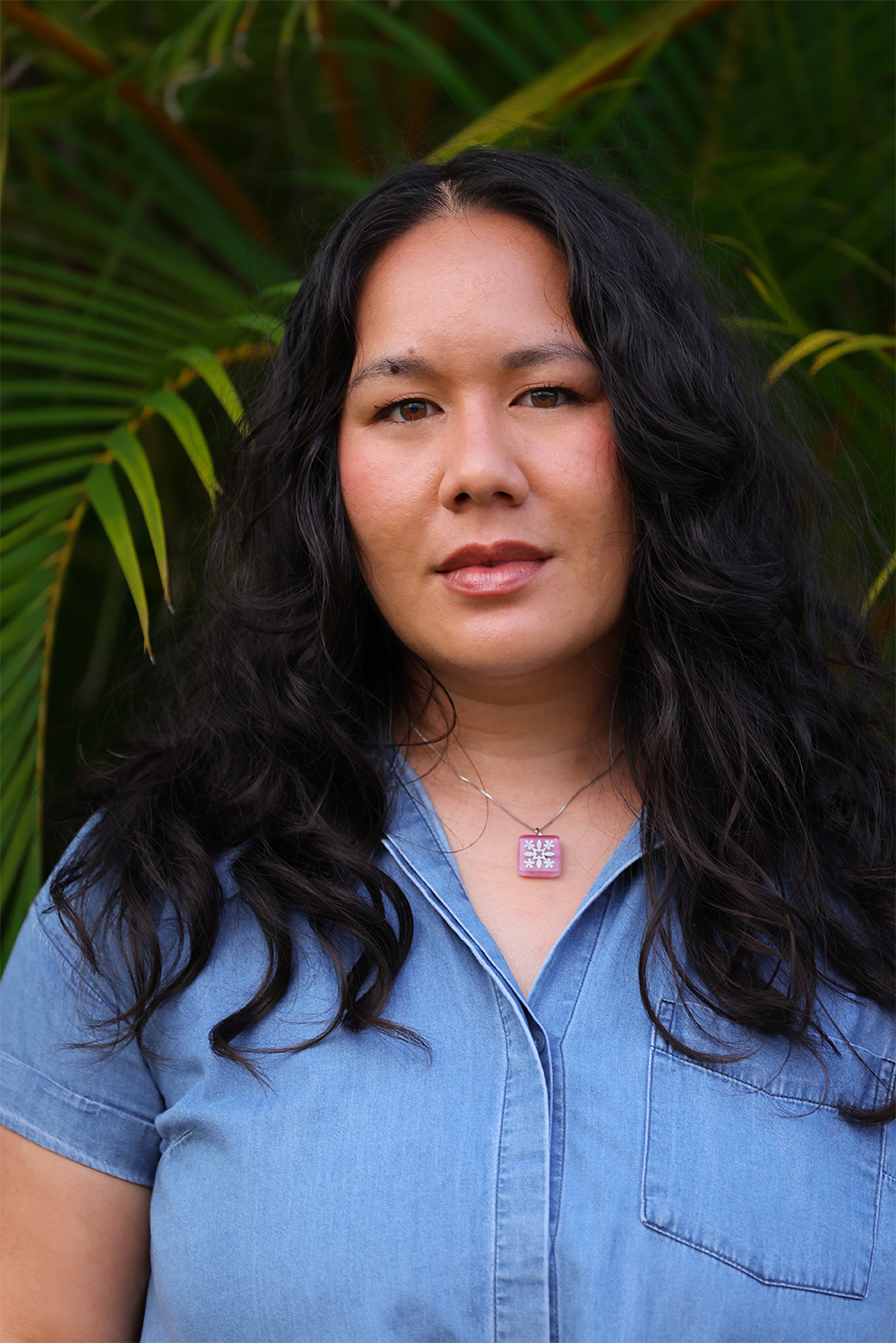
Shay Kauwe is a Kanaka Maoli author from Hawaiʻi. She grew up on the Homestead in Waimānalo but moved to Russia because she fell in love with a boy. They now live in Oʻahu. Shay holds an M.Ed in Education and was named an NCTE Early Educator of Color in 2021. In 2022, she was awarded an Empowering ʻŌiwi Leadership Award by the Hawaiian Council for her work in storytelling and literacy. Her debut urban fantasy The Killing Spell was published in April from Saga/Solaris Books and is the first traditionally published adult fantasy novel by a Hawaiian author.
Banner image courtesy of Pawel Czerwinski.