Love the Mob You’re With
Like those re-runs of Goodfellas that just won’t go away, the icons of Hawaiʻi’s great gangster era command our attention whenever they resurface in media accounts. Every time a rumor of a film or series about them comes up for air, however, we can be sure it will slowly sink without a trace. Until now. This time it’s different. Because Martin Scorsese himself is coming for a loglined “Hawaii-Set Period Crime Drama” about our cherished Seventies hoodlums and their hui.
Here, casting a wary eye over the new development, is Chris McKinney, whose slashing novella Yakadoshi: Age of Calamity is the most visceral fictional take on Honolulu organized crime—best enjoyed with sides of Sunny Skies, Shady Characters by James Dooley and Mark Panek’s roman-a-clef of local corruption, Hawaiʻi.
Do monsters like those of the 1970s still walk among us? Who knows? Today’s organized crime takes place in the open. You can Google who force-fed Rail down our throats so they could eat foie gras for breakfast. The descendants of those who stole The Kingdom. The ones who gave away the leases for $1 and their clones who are now going for the paltry ceded lands that were deeded back to the Hawaiian people in 1922. Those big guys are still operating with impunity.
Meanwhile, for entertainment, we have Scorsese and Dwayne Johnson. And McKinney, dropping mic —D.W.
Fresh off statehood, 1970s Hawaiʻi was our lawless Wild West.
For better or worse, American things often come late to the 50th state. I was a local kid born of this era, raised in Kahaluʻu. I spent my childhood sitting in the back of a pick-up with my brother, riding east to west, past the drive-in theater, through the backwater streets, which were endlessly lined with abandoned cars and large kitchen appliances, undeveloped roads everyman’s landfill. I recall my dad and his friends laying net at Kualoa Beach, mercilessly pillaging Kāneʻohe Bay, baby hammerheads and all. On some weekends, we’d four-wheel through Kaʻena Point and unload rounds from every kind of gun imaginable, including a .44 magnum and an Uzi.
People in my neighborhood didn’t drink and drive—they drank while driving, can of Olympia wedged between their thighs. No seatbelts worn, of course. Arms dangling out of car windows, over the years, countless lit cigarettes flicked on asphalt. It felt like everyone smoked pakalolo. I was 10 the first time I did.
My brother and I, armed with BB guns, used to shoot anoles off the marijuana branches that grew in the hothouse in our backyard while on TV, a glassy-eyed Bruce Carter watched Hari Kojima cook, beer in hand.
Boy, it’s easy to get nostalgic about unchecked freedom; however, there are other, darker things I remember. The streams of the Koʻolaus getting so polluted that the water sometimes took on an unnatural, rusty hue. The Samoan crab population nosediving into oblivion. The papio, less and less plentiful, until catching one felt like a minor miracle. Excess needed to be checked. Perhaps it was checked too late. Permanent damage had been done, not just to ecosystems.
Unbridled development, corruption, and capitalism were unhinged in the Seventies. And the Seventies were also when the larger-than-life organized crime figure emerged in Hawaiʻi.
Made in Hawai‘i
When we try to copy the Mainland, we often flop in spectacular fashion. Whether it be Rail, sky bars, or stadiums, the failure of trying to be something we aren’t feels inevitable. I’ve always gotten the sense that power in this state is mindlessly driven to make this place another NYC, San Francisco, or LA.
However, in the 70s, Hawaiʻi organized crime got ruthless Mainland criminality right. Modeled after La Cosa Nostra, “The Company” or as my dad and his friends called it, “The Syndicate,” murdered, bribed, and intimidated with the best of them. They even had their own Frank Sinatra: Don Ho.
I remember local people being proud that crime bosses in Hawaiʻi could go toe-to-toe with the Mainland guys. There’s an infamous story about two mobsters from Chicago being sent here to intimidate the burgeoning syndicate, only to be sent back in a trunk in pieces. A note accompanied the trunk, reading: Delicious, send more.
After that, when the Italian mafiosos visited, they came with respect. When our guys would go to Vegas, they were picked up in Lincolns and comped at casinos.
I’ve heard other stories over the years—bodies being disposed of at pig farms and cesspools, and big guys who could hit the heavy bag so hard that it didn’t swing. It bent. Hand grenades tossed into ravines to celebrate New Years Eve. Holes buried in sand, not just in Vegas but here at home, too. Once, a pair of Syndicate brothers took their recently dead friend barhopping, propping the corpse up on a stool at each stop while they ordered shots, horrifying bar staff and patrons. And those junked appliances on the outskirts of Kailua? Rumors of chopped up bodies hidden within them.
I spent my youth imagining severed arms in decrepit Maytag ovens.
Who Da Boss?
So, who was the boss of organized crime in Hawaiʻi the 1970s? According to most public sources, up until 1974, it was Wiford “Nappy” Pulawa. At over six feet tall, and over two-hundred pounds, the former Roosevelt High School Rough Rider looked the part. Also, he was Hawaiian. I’m just going to be honest here. In those days, the big Hawaiian was the most feared human in the islands. Sure, there’d occasionally be the huge friggin’ Samoan or the crazy “Potagee” or “Japanee,” but make no mistake: It was the Hawaiians running organized crime in Hawaiʻi, and Nappy Pulawa played a key role in snatching power away from the Asian gangs and creating The Company.
At the time, locals seemed to be good with that. Hawaiians had everything taken away from them. Wasn’t it a fair consolation that Native Hawaiians ran something, no matter how sordid, in their homeland? The legendary names—our versions of Jesse James and Billy the Kid—Nappy Pulawa, Ronnie Ching, Henry Huihui, and Charlie Stevens—all Kānaka Maoli.
Like all things Wild West, there’s an almost inescapable nostalgia here. A downtrodden indigenous people rising, consolidating, and eventually controlling crime in their island nation. Led by Nappy Pulawa, The Company smashed invading foreign gangs to bits, from both East and West, and broke the laws of the American imperialist occupiers with impunity. That’s quite inspirational, isn’t it?
On the surface, that’s Geronimo level stuff. I mean, people like Pulawa made most of their money running illegal gambling. Should gambling even be illegal in the Kingdom of Hawaiʻi? Shouldn’t it be the native people of this land that decide what is and what isn’t legal?
Okay, so maybe not Geronimo. Not after Nappy Pulawa began putting together his criminal organization in the late 1960s. The Company eventually ran illegal gambling, prostitution, extortion, and racketeering in Hawaiʻi. Associates of Pulawa and The Company included notorious figures like Ronald Ching, a hitman who was eventually convicted of killing a state senator in 1970 and the son of a prosecutor in 1975. He also confessed to burying a federal informant alive in 1978 at Māʻili Beach.
When Ching’s apartment was raided by federal agents in 1981, they found semiautomatic rifles, $28,000, five pounds of marijuana, a silencer, and a chunk of C-4 in a box taped under the kitchen sink. Allegedly, he eventually told investigators that he’d killed as many as twenty people.
And yet at the time of the bust, Ching was a Teamsters Union Driver for Magnum P.I.
Then there was Henry Huihui, a one-time director of education for Local 1186 of the International Brotherhood of Electrical Workers. One of Pulawa’s chief lieutenants, Huihui had been tied to so much crime that when he was indicted in 1984, he faced a possible 360 years of sentencing.
It wasn’t just murders. Under a federal deal, the testimony of Huihui mentions union ties, shady real estate deals, a plot to murder Teamsters boss Art Rutledge, and allegations that he paid Governor George Ariyoshi’s political campaign $50,000. During these rounds of questionings, Nappy Pulawa’s name appeared as well. Huihui claimed that Pulawa and an accomplice named Royale Kamahoahoa shot down a Windward Side gambling figure at the Olomana Golf Course in 1974. Though charges were brought against Pulawa, they were eventually dropped.
Nappy’s Inside Straight
Who is Wiflord “Nappy” Pulawa? Born in 1935, he’s about ninety-years-old now, living on Maui from what I hear. Unlike his associates, Ronald Ching, who died at age fifty-six in Halawa Correctional Facility where he was serving a life sentence, or Henry Huihui, who passed away in 2015 after serving twenty-six years in prison, Pulawa has lived a remarkably long life.
Of the three, he also, by far, did the least amount of prison time. Though he had been charged with a double murder in 1974 and tried again for the same murders in 1978, Pulawa was not convicted. During the second trial, he said that as a Native Hawaiian, he did not recognize the jurisdiction of state and federal courts and refused to stand for the judge and jury.
In 1985, Pulawa was charged with yet another old murder, but again, he was not convicted. Pulawa did do ten years for tax evasion and was paroled in 1984.
Right about the same time he was coming out of prison, Pulawa’s former associates, Ching and Huihui, who ran absolutely wild during Pulawa’s incarceration, were going away for a very long time. Essentially, Nappy Pulawa was lucky to go to jail when he did. He was temporarily put out to pasture while both state and federal law enforcement’s skills developed from incompetent to effective. In a single decade, Hawaii transformed from the corrupt sheriff in town modality to full federal crackdown. Nobody rains on a felonious parade like the Department of Justice, who to this day pops on the scene like a clean-up crew on a once-a-decade schedule.
After he was released, Pulawa became a construction elevator operator. By the end of the 1980s, the Wild West in Hawaiʻi waned. In the end, it seems Nappy Pulawa was able to ride off into the sunset.
Gangsterism A.N. (After Nappy)
Today, criminal investigation is a far different field. Back in the 70s, there were no smart phone cameras, no GPS, no DNA evidence, and no CCTV. Absent were the ghostly pitter patter of digital footprints.
Once, during a conversation with a fellow Hawaiʻi writer, Scott Kikkawa. I asked him why his noir crime fiction was set exclusively in the past. Considering Scott often works with the FBI, his expertise, exposure, and experience would surely make contemporary crime a tempting genre. I laughed when he said that crimefighting today is rather boring. It’s done in front of a computer more than anywhere else. The vast majority of criminals don’t stand a chance. Cases are made with insurmountable mountains of evidence extrapolated from bytes and genetic code.
But the 1970s, ah, what a time to be a career criminal. The cabal of politicians, local law enforcement, and gangsters at its pinnacle. The famed Metro Squad cracking skulls with impunity like boomtown sheriffs (just imagine if body cams were available back then). It was a time when a former Metro Squad member, Larry Mehau, could be appointed by Governor John Burns, another former cop, to the Board of Land and Natural Resources.
Mehau’s post-retirement company, Hawaiʻi Protective Agency, ran security for all the airports in the state (pre-TSA), and one has to ask: Wouldn’t this give the proprietor control over what was flown in and out of the state, including pieces of Chicago mafiosos in a trunk with a note attached?
Meanwhile, Honolulu Mayor Frank Fasi was indicted for accepting a $500,000 bribe, but the charges were eventually dropped. Just about everyone seemed to gamble—my dad, stepdad, their friends, and my uncles included. They’d frequent Natsunoya Tea House, converted after hours into a table game hotspot. Nappy Pulawa and The Company ran gambling, collecting their 20% by any means necessary and eventually, Pulawa’s name was put in Vegas’s Black Book in this far grislier, cyberless era.
Strange Bedfellas
Oddly, this timeline runs parallel with another thing that was intensely brewing in Hawaiʻi during the 1970s: The Hawaiian Renaissance. Those of us from here know that the 70s marked a time of a remarkable resurgence of Hawaiian culture. Not just the reverberating protests over Kalama Valley, Kahoʻolawe, and Waiahole-Waikane, but culturally the incredible revival of hula, the Hawaiian language, and the construction and voyage of the now legendary Hokuleʻa.
Hawaiian culture literally sprang into the airwaves through car speakers. Who wasn’t listening to Gabby Pahinui, The Beamer Brothers, C&K, or Kalapana while chugging beer and flicking cigarettes out the window?
So while Ronald Ching committed mass murder and Larry Mehau helped chart the career of governors, protesters risked their lives to oppose the indiscriminate bombing of a Hawaiian island by the U.S. military.
Concerning Mehau’s possible participation in organized crime, I ask only this. If he was simply an influential, legitimate businessman, why was everyone so scared of him?
Regardless, it seems impossible, this dichotomy—the cresting and peak of activism occurring simultaneously with the height of corruption and the local mob. Sharing indigenous backgrounds, did these groups work together or clash? There seems to be no evidence of the two joining forces. Perhaps cultural ethos kept them separate—which culture, American, local, or Hawaiian, I do not know.
Only those who lived the 1970s Hawaiʻi truly know what it was, and according to census data, 769,913 people lived in Hawaiʻi in 1970. Fifty-six years later, many of those who lived during this era have passed, and those of us who were born into it only remember some fuzzy, childhood details. (Editor’s Note: Unless we still have reason to be cautious.)
Are You Not Entertained?
So, clearly, it’s an opportune time to rewrite history when it comes to the story of The Syndicate. First came The Wrecking Crew, a film starring Jason Mamoa and Dave Bautista and released in January. The Syndicate makes a brief appearance, portrayed as comically menacing and reluctantly benevolent. The film vanished after a week.
Next, in April 2025 Dwayne Johnson announced that he, along with writer and journalist Nick Bilton, were writing a book and screenplay about Nappy Pulawa. The official logline for the film, as reported in Variety: “In 1960s and ‘70s Hawaii, a formidable and charismatic mob boss rises to build the islands’ most powerful criminal empire, waging a brutal war against mainland corporations and rival syndicates while fighting to preserve his ancestral land—igniting the last great American mob saga, where the war for cultural survival takes place in the unlikeliest of places: paradise.”
As it happened, I would have a chance to speak to Bilton about the project. He’s the author of American Kingpin, a true-crime telling of Ross Ulbricht, the creator of the digital Silk Road, which facilitated drug smuggling, money laundering, and, authorities alleged when indicting Ulbricht, murder-for-hire.
When I talked to Bilton, he seemed very devoted to the Pulawa project. However, since then, Nick has controversially ascended to the role of executive producer of embattled 60 Minutes. And as this happened at the same time that longtime correspondents were being fired or resigning in outrage, people have asked: Will 60 Minutes become another media arm of the current administration?
Personally, I wonder what this will this mean for the Nappy project.
Perhaps it’s not beyond the realm of possibility that we will one day see an elderly Pulawa being interviewed by a new, Trump-approved CBS correspondent—a writer’s marketing dream come true during the midst of yet another Wild West—the Wild West of amplified distraction and misinformation.
It was President Trump who, after all, pardoned Ulbricht, who had been serving two life sentences. Trump is a President, some would say, who runs things like Metro Squad, The Syndicate, and Fasi rolled into one. We clearly live in a country where many yearn for this style of lawless leadership.
In America, we often have the habit of deifying our outlaws while we quickly forget the victims. Whether it be Jesse James or Billy the Kid in the 19th century or Baby Face Nelson and Al Capone in the early 20th, our romanticization of violent criminals far outweighs our sympathy towards those who tragically fell in their vicious paths. I challenge anyone to rattle off a list of victims of the above criminals. Their names dim quickly while the names of their destroyers shine more and more brightly.
There’s something almost weirdly galactic about the phenomena, yet very much human. As Judge Holden says in the greatest of Wild West novels, Cormac McCarthy’s Blood Meridian:
“Moral law is an invention of mankind for the disenfranchisement of the powerful in favor of the weak. Historical law subverts it at every turn.”
History subverting morality is as old as it is compelling. Perhaps coming soon in theaters and bookstores, or an episode of 60 Minutes, whether realistic or not, audiences will be able to gander a turbid Hawaiʻi, America’s last Western frontier.
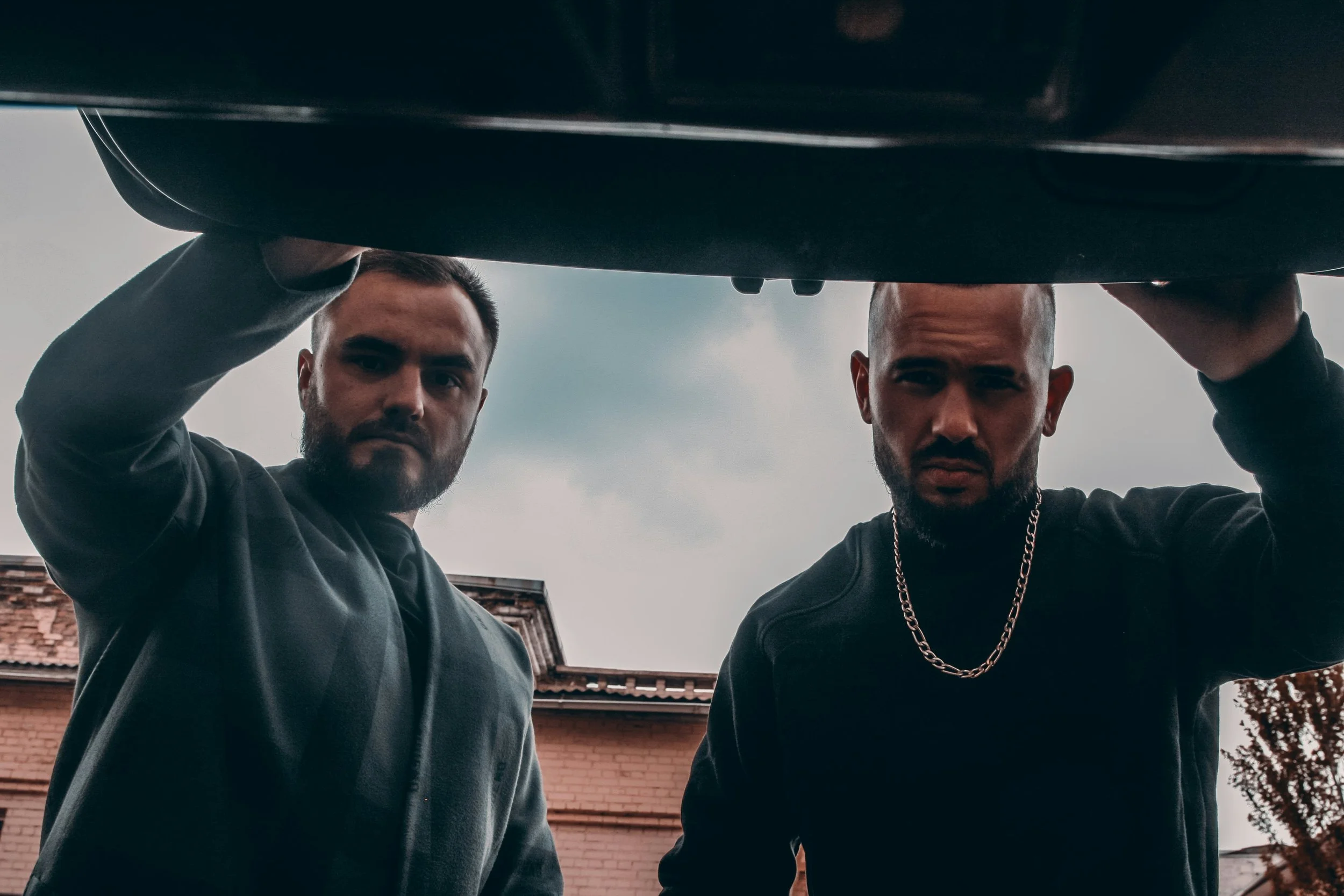
Image by Artem Budaiev.
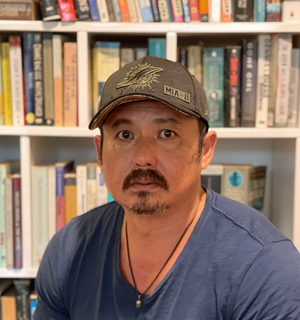
Chris McKinney was born in Honolulu and grew up in Kahalu‘u on the island of O‘ahu. He is the author of six novels, The Tattoo, The Queen of Tears, Bolohead Row, Mililani Mauka, Boi No Good, and Yakudoshi: Age of Calamity. His seventh novel, Midnight, Water City, was released by Soho Press and distributed by Random House in July 2021. Chris has written two feature film screenplays, Paradise Broken (nominated for best film at the Los Angeles Pacific Film Festival), and Haole, which he co-executive produced (currently available on Prime Video). He has also written two short films, "The Back Door" and "Calamity," which he also co-produced.
In 2011, Chris was appointed Visiting Distinguished Writer at the University of Hawai‘i at Mānoa. Over the years, he has won one Elliot Cades Award and seven Kapalapala Po‘okela Awards. His first novel, The Tattoo, represents Hawai‘i on Quiklit's 50 States, 50 Novels: A Literary Tour of the United States.