Can This Land Be Saved?
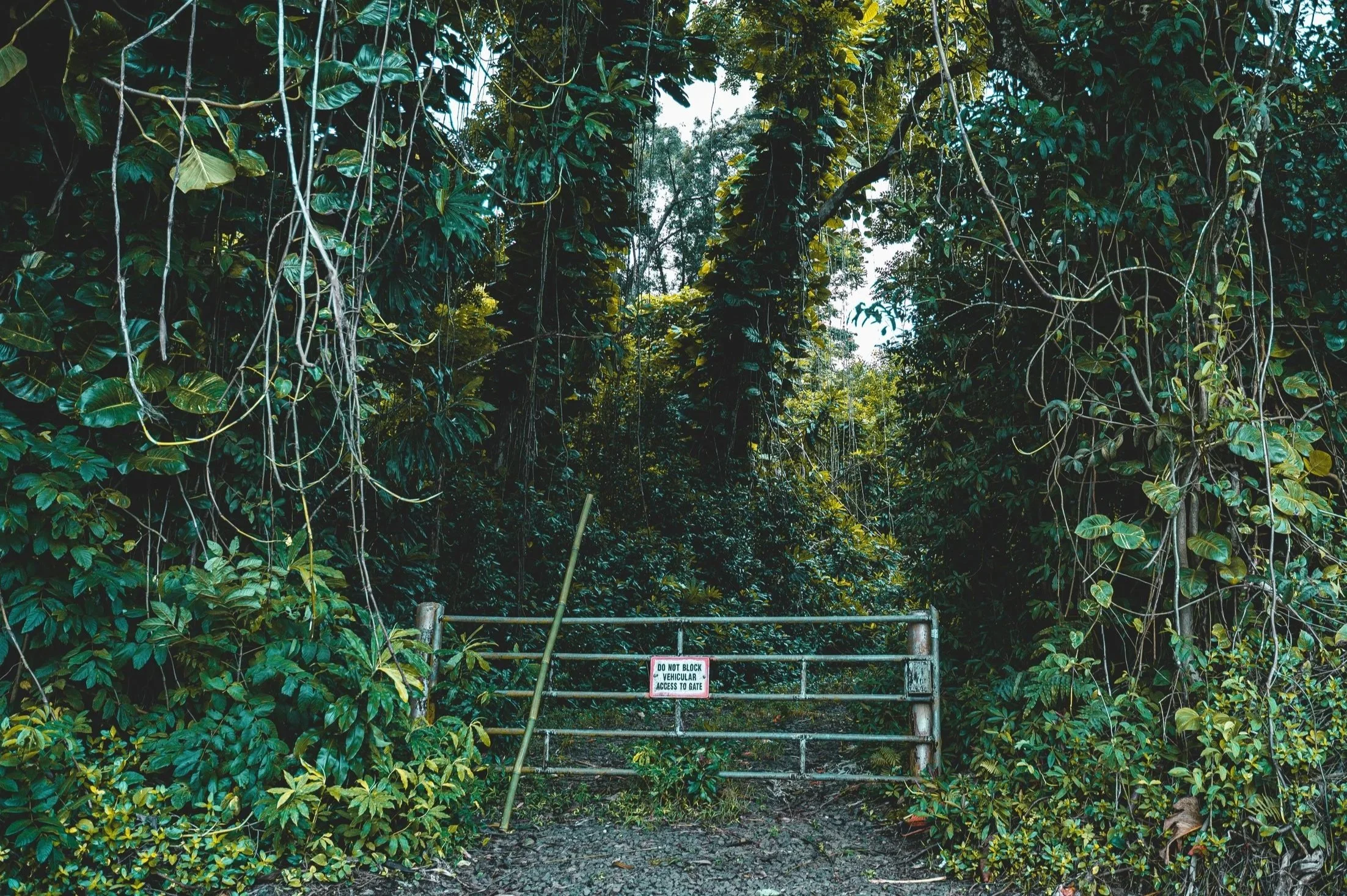
A tax bill from Maui County kick-started Washington, DC-based editor and journalist Sara Kehaulani Goo and her scattered relations to question what land means in Hawai‘i—and how best to use or preserve it—when it’s no longer home.
California-born Goo had been chasing her own dreams for decades, comfortable with the backstory of family land, including a heiau, given to her Kahanu forbears by Kamehameha III. Never quite secure in her own story as a child of Native Hawaiian-Okinawan/Chinese-Western European ancestry, the former editor-in-chief of Axios, digital managing editor at NPR, and news director at The Washington Post decided to act on the threat of losing the land to an anonymous bureaucrat who’d decided their acres of Haˉna jungle deserved a 500% tax increase.
It galled that the family had already deeded over the heiau they’d preserved and tended for hundreds of years, now a National Historical Landmark. What’s more, when they applied for a Hawaiian kuleana exemption the Native Hawaiian Legal Corporation ruled they were ineligible because their common ancestor had received the land as a personal, instead of communal, grant.
The land in question is difficult to clear, difficult to keep clear, and very hard to get to—and then there’s the question of what you do when you get there if it’s “just” land. In Kuleana Goo faces the hard stuff without flinching. And in this excerpt we get a taste, and a primer, in how to approach issues so important to Hawai‘i—and maybe to your own family. Because what is the point of holding onto land as a keepsake, even if it is historic and a cultural legacy? Who bears the cost? For how long? What’s a pono exit strategy? —D.W.
A few years after my visit with my grandparents in 2001, and with the help of relatives, Grandma was able to finally pay for a bulldozer.
It would come and clear enough of her land to make way for a narrow dirt road and a flat area that could serve as the perfect spot for a small home where she and Grandpa could live, at least part of the time. Over time, she said, we could add onto it and ensure that “you folks,” as she’d say, could visit and know Haˉna like she did. It was finally happening. Years of praying and saving and planning. She never did win the lottery. But she was on the cusp of fulfilling her dream to find her way back to Hāna.
The Hāna home was never built. Soon after the land was cleared, Grandma and Grandpa learned that a nearby property owner had complained to the county that she had bulldozed a small section of her land without proper permitting. After the work of clearing the Hāna land got underway and the thick jungle brush was moved out to actually create a road where one could walk, the county ordered the work on Grandma’s property to stop.
Recalling that event years later, sitting in his Nānākuli home, Grandpa still felt the raw anger, frustration, and sadness from that moment that he could never claw back.
“Some haole went and complained, said we need some kind of survey done. Can you believe it?” Grandpa said, his voice rising and the anger building up in his voice. “Can you believe it? They wanted some archae-o-logical survey done! Would have cost us another ten thousand dollars. You know why?! Because they said the property was near the heiau, an impor-tant archae-o-logical site!”
The irony was cruel. In 1972, Grandma’s mother, Mileka, and her siblings had, along with the Hāna Ranch, donated the heiau and sixty-one acres of surrounding lands to the National Tropical Botanical Garden, a nonprofit organization, with the promise that the heiau would be preserved, restored and forever protected. The heiau was designated a National Historic Landmark. Now the bureaucracy of that protection was a reason blocking Grandma’s return to that ancestral land because her land was down the road from the heiau.
“We sat there with the lawyer, him telling us this,” Dad remembered. “And when your grandma heard that, her face just fell. It was like it was over. It’s like she knew she wasn’t going to see that house built. Ever.”
When Grandpa and Dad told me the story, I just sat in silence, stunned. I joined in my father’s and grandfather’s anger, regret, frustration, and more. Why were the forces so hard to overcome? Who were these people preventing Grandma from doing what she wanted with the land that she owned? Why were there so many barriers to a Native Hawaiian woman who just wanted to return to the land of her ancestors after all the miracles it had taken for the land to remain with her—and our family—at all? In her mind, the money, the faceless bureaucracy, the powers that be must have just felt insurmountable. It seemed impossible. After a few minutes, Grandpa went on; this time, his voice was more subdued.
“The whole point of moving back to Hawai‘i was that we could someday build a house in Hāna,” Grandpa said ruefully, sitting across from me at the kitchen table, gazing down at Grandma’s plastic-coated tablecloth. His narrow eyes were watery. His mind was remembering her and how close they had come. He was confessing to me that he had somehow let her down, too.
“It was like the air left her. Her dream had been wiped out,” Dad later told me, remembering that news. “She kind of gave up. She said, ‘Oh, well. I guess that’s it.’ It’s like she knew her time was short.”
Six months after the county stopped Grandma’s efforts to build a house, she died of a sudden stroke. And by that time, the jungle forest that had been cleared from the Hāna land had grown back. The pandanus trees, the wild papayas, and the brush reclaimed their space, without a trace of Grandma’s home site and the road visible at all. It was as if the jungle swooped in and swallowed it all away.
“There’s something about, between the bureaucracy stopping her or Grandpa, who was ultraconservative financially, everybody telling her she can’t do this, you can’t do this because you don’t have enough money . . . she resigned,” Dad said. “The Hāna property never came up again. She had said all she was going to say about it. She expressed her wishes. It was like, you have heard it all. The rest is up to you.”
After striking out with our legal review, it was time for plan B. Dad called me one afternoon to tell me about his new plan to reduce the taxes on the Hāna land: we were going to make a farm. Or, at least, make it look like one.
When he first explained it to me, I thought he was crazy. Dad’s idea was to convert Grandma’s land—which was currently a wild, rocky, overgrown rainforest in a remote part of Maui—into acres of tropical plants. Here’s how it would work: First, we’d have to somehow get heavy equipment out to the land to clear away the jungle trees and brush to make space for our new crops. This would require us to find a bulldozer to rent and then find a truck driver willing to haul it on the two-and-a-half-hour drive along the narrow road that hugs enormous cliffs along the Maui coast, across at least fifty-nine bridges, to Hāna, most likely traveling in the middle of the night. Then we’d have to assemble a crew of family members to fly to Maui and help cut down the existing trees in a one-acre space, using machetes and shovels in Hāna’s alternating hot sun and rainy downpours. This would most likely require several of my uncles and family members to take time off work to fly in from California, Massachusetts, Virginia, and Maryland. Then we’d plant something in the cleared space that would resemble a farm. The final step would be about documentation: we’d take photos of our new agricultural use to send to the county as evidence of our farming activities.
In a way, we didn’t have a choice. Our taxes had gone up more than fivefold in one year because Maui County decided that Grandma’s property no longer could qualify as being used for agricultural purposes. For raw and undeveloped land, the county had one of the highest property tax rates. So the most straightforward way to lower our taxes back to the original amount would be to try to get our “ag status” back.
Our goal was to complete the farm before the end of the year so we could submit for a property use change to the County of Maui. If we succeeded, the county would approve our ag status for next year’s taxes—thereby lowering our taxes to what they were before.
In other words, this would be an enormous task that would require time, money, logistics, and a bit of luck. Or as Dad said, “Challenging, but doable.”
Dad activated the “coconut wireless” system in our family and got to work. He found out that his cousin Bobbie and her two siblings, who own the land parcel next to ours, also saw an enormous tax hike for the same reason we did. Like us, she had panicked when she got her property tax bill in the mail and saw the taxes had gone up several times over. Like our land, hers is also wild and uncleared. As a retired widow and cancer survivor living on a fixed income on the neighboring island of O‘ahu, she confided in Dad that she was considering selling her land because she wasn’t sure she could afford to pay the taxes. The latest bill was causing a lot of family angst: not only did she face a higher tax bill, she’d have to foot the bill on her own. Her sister had never been involved or interested in the property. And her brother, who had been helping with the tax bill, now said he wouldn’t help anymore and encouraged her to sell.
“He doesn’t have the same interest or connection to the land. He doesn’t care,” she said of her brother. “He doesn’t understand why we are holding on to it just to pay more and more taxes.”
In a way, I totally understood the practical argument from Auntie Bobbie’s brother. In recent years, living in Hawai‘i has become challenging for all local residents who struggle just to pay their own rent or mortgage. Hawai‘i’s housing costs are 2.7 times higher than the national average. Over the past decade on Maui, four in ten homes are owned by people who live in another state—driving up prices and more competition for locals who need housing for their families. In 2023, the governor declared a “state of housing emergency” because the housing problem had become a people problem—local residents were leaving because housing costs were too high. So I could see how paying higher taxes on land your family doesn’t live on—or can’t ever afford to build on—wouldn’t be the biggest priority even if you could afford it.
If we or Auntie Bobbie or any other members of our family sold the land on the open market, we 100 percent know where it would go—to a wealthy US mainlander or foreigner looking for a vacation home or investment. We knew this because our family’s land is next door to land long owned by the actor Jim Nabors and in the same town as Kris Kristofferson’s and down the road from Oprah Winfrey’s property
Unlike other celebrities, Hāna tends to attract wealthy people who want to live in the more secluded parts of Hawai‘i.
But the bigger picture is that Hāna is one of the few parts of Hawai‘i where a large portion of Native Hawaiians still live and work. If all the members of the Kahanu family sold our land, we’d just be another property sale on Maui fetching top dollar, which would just exacerbate the existing problem: less land available for locals, higher land values and taxes for everyone else, driving up the cost of living for everyone still struggling to make ends meet in Haˉna. Moreover, we’d lose our connection to a place that has been sacred for nearly two centuries.
The decision was up to Auntie Bobbie—and it was not an easy financial one. She was on the fence. Auntie Bobbie’s two adult daughters don’t have any children. But they urged her to hold on to the land. “My girls grew up listening to stories of how our kuˉpuna got the land, so they want to do something, but you need money, yeah?” Auntie said. “You can’t just do things and not live there. If we clear it, it’s going to be overgrown again. I’m hoping somebody comes up with an idea. I’m at the point where sometimes I tell my daughter Joni I’d like to lease it because I’m getting older; I can’t go over there to Haˉna and keep digging and weeding.”
The decision was stressing Auntie Bobbie out. Dad walked through his “farm” idea with her and made her an offer: If our family was going to go to the trouble to clear our land, why don’t we share the cost and clear her land, too, since it’s an adjacent property? We could design the farm in a way that we could plant crops on one acre that would cover both properties. ‘Ohana helping ‘ohana.
Auntie Bobbie talked it over with her daughters. She came back, and they’d all agreed. Joni, who was particularly close with her late grandfather—my grandma’s brother, Juinchi “Clarence” Matsuda—volunteered to fly to Maui from Honolulu to help clear the land, too. Our little “farm” in Hāna would now be larger, stretching across Grandma’s property and including Auntie Bobbie’s, too.
Next, it was time to find the equipment to clear the land and round up the volunteer brigade. Dad’s next call was to Uncle Keith and Auntie Gizelle, who live in Kula, Maui, and whose family also has nearby plots of land adjacent to ours from our shared Kahanu ancestor.
Gizelle is Dad’s cousin—one of Uncle Take’s daughters—who seems to know everyone on the island. She quickly became our family’s guide to how to navigate the local system, trying to back-channel with people she knew who worked for the county about how other Maui property owners were also trying to get their taxes lowered. Although Gizelle’s family hadn’t seen a spike on their Hāna property taxes, Auntie Gizelle and Uncle Keith knew that they could be next.
Since they already live on Maui, Keith and Gizelle visit their property regularly and they had already cleared their own land parcel, which sits on the slope of a hill on the other side of the dirt road that divides our extended family’s land. Years ago, they had put a small converted trailer to camp on, with a large deck that provides a beautiful ocean view.
Dad asked Uncle Keith how to go about hiring a bulldozer. “Eh, bruddah, no need,” Uncle Keith said in his thick pidgin. Uncle Keith had a construction business on Maui and explained that he had access to bulldozers that he could transport to Haˉna, which he’d done dozens of times on the hairpin turns along that road in the middle of the night—avoiding the tourist traffic.
Uncle Keith is the person in our family whom we jokingly call the “real Hawaiian.” He’s a tall, broad-shouldered man with dark, tan skin; long, graying brown hair down the middle of his back; and is quick to give a smile and the shaka sign to anyone. Like Auntie Gizelle, he also grew up in remote Hāna, but his big Native Hawaiian family—he’s one of nine children—had a large farm. He loves spending time on their family’s plot of land with their two adult sons, hunting and fishing and taking care of the land, surrounded by the quiet beauty of it. And as someone who was raised on a farm, he also knew best about how to tame the land in the rainy, jungly climate.
“We say I married the city girl,” Uncle Keith likes to joke about Auntie Gizelle, who grew up in Hāna, a town of 731 people that doesn’t even have a stoplight.
With a few text messages to his network, Uncle Keith got us a low price to rent a bulldozer and generously offered to transport it on his own dime and help us by driving it to clear the land himself with his sons.
“Do dem all da time,” he told Dad. “You sure, Keith?” Dad asked.
“It’s ‘ohana!” Uncle Keith said. Now, Uncle Keith and Auntie Gizelle not only provided our family with local knowledge about the best way to go about it but also volunteered to help us themselves.
It was ‘ohana. It was true aloha.
Next, Dad called around to assemble a crew to fly out to Hāna for about a week’s worth of backbreaking labor to help create the farm. Dad started with his brothers and brothers-in-law to see whom he could round up. His younger brother, Uncle Duane, who lives in Massachusetts, was in. His older brother, Uncle Darrell, and his brother-in-law Uncle Tim, who live in the Santa Barbara area of California, also said yes. And my brother, Ben, who lives in Richmond, Virginia, also was in.
I’d like to say that I attended this trip, but I didn’t. The trip was scheduled quickly, based around when Uncle Keith could reserve the equipment and drive it out, so I was unable to leave work and kids behind on short notice. But after settling on a date, they flew out to Maui where they met up with Uncle Keith, his son Luka, and Joni, who took the hopper flight over from her home on O‘ahu. Dad’s crazy farm plan was now taking shape, and we had an ex-tended family crew that was now activated to save the ‘āina.
The taxman had forced us to scramble, and we were ready. Just as planned, Uncle Keith and Luka left before everyone else, on the road to Hāna in the dark of night, to get there faster and not cause a traffic jam. Uncle Keith is such a local that normally he could drive the Hāna Highway in half the time it takes me—passing slower drivers along the way with just inches of space be-tween the car and the cliff. I can only imagine how he navigated his way hauling heavy equipment on a flatbed truck at a record pace in the middle of the night. The rest of the crew followed them up to Hāna the next morning, ready to go.
Ben said they had a system: Uncle Keith would drive the heavy equipment to clear the land, and the rest of the crew would fan out behind him on each side, wielding machetes and chain saws, whacking away the brush and cutting down the spindly bushes, whose leaves are like long, sharp knives.
“It was a lot of fun, actually, like FernGully,” Ben said, referencing the animated movie set in an Australian rainforest. Somehow, they found the original road that Grandma had cleared back in 2004, before she died. Although many plants, vines, and young trees had quickly filled in the space, they could still make out the path of flattened rocks that led to the ocean. Ben, my dad, Uncle Darrell, and Uncle Tim, along with my cousins Luka and Joni, took turns using machetes and chain saws. For lunch, Uncle Keith parked his truck in the hot sun, put Hot Pockets and microwave burritos on the dash, and after a short time sitting in the searing heat, they were ready to eat.
The crew outlined a one-acre square across the two properties—it was really hard to tell where ours started and Auntie Bobbie’s ended except for a few small, old markers—and used a jackhammer to break down large rocks. Once the space was cleared, the crew planted ti leaves, coconut trees, and heliconias donated by Kahanu Garden and whatever else they could find. When work was pau for the day, they celebrated with some well-earned cold beers and then collapsed into bed to do it all again the next morning, starting early before the sun got too hot.
After a week of sweating, bulldozing, and hard labor, they managed to create something that truly looked like a farm—or at least a very large garden of various plants. Dad joked that it’s not really how one thinks of using vacation time off work to spend a week in Hawai‘i, but they declared the mission accomplished!
To wrap things up, Uncle Tim used a drone to take aerial photos of the land to show how Grandma and Auntie Bobbie’s land was now being used for agricultural purposes again. With crossed fingers, we hoped this entire effort would get us and Auntie Bobbie qualified for a lower tax rate the following year.
I wasn’t sure that this farm effort would work, but it showed how one decision—one stroke of the pen on one document by one government agency—had the power to throw our family into a crisis and threaten our kuleana to take care of this land. It demonstrated just how precarious it all was and how, with short notice, we’d have to act or face losing our land.
What we didn’t want to happen was to become the latest Native Hawaiian family to lose their land to sell to a wealthy haole who would own it, maybe develop it into a fancy vacation retreat, maybe visit it once a year. We didn’t want to become the literal end of the generational line who had held that land in our family as a testament to our promise as native people to maintain our ties to it. It was not about losing the economic value of the property or benefiting from it. It was that it was our only lasting physical existence and tie to the Hawaiian kingdom, to a way of life, to Old Hawai‘i.
While it was awesome to see my family come together, across generations, uncles and aunties and cousins, on the mainland, on Maui, put literal skin in the game to help keep our ‘ohana lands in ‘ohana hands, we also knew it was just a Band-Aid. We knew, of course, that spending thousands of dollars on airline tickets and renting bulldozers or backhoes every year was not going to really be feasible, nor did it make sense. The idea of creating a farm sounded crazy because it was crazy. We needed something more permanent—or at least more lasting that would provide us with greater certainty that we could afford to hold on to the land.
Oddly enough, we learned that the county’s tax system is such that we’d pay a lower rate for having land for agricultural use rather than land that was raw, wild, and undeveloped for no use. And we’d pay an even lower rate if we developed our land, such as by building a small cottage. That reality forced us to think about whether we should build something on it as a long-term plan. After all, that was Grandma’s dream that was never fulfilled.
Building a small cottage would give us a foothold in Haˉna that, as a family now largely living on the mainland, would make it easier for us and future generations to come to Hāna. Flying from the mainland to Hawai‘i was already expensive. But getting to Hāna and being able to afford to stay in Hāna is also tough, given that there’s only one hotel, which offers rooms at more than $600 per night, and only a handful of other, more affordable inns with limited capacity. Building something for our ‘ohana would encourage us all, and our kids and our kids’ kids, to “come Hāna,” as Uncle Take would say. For that reason, I—and Dad and other family members—liked the idea that if we built a small cottage, it would serve as an investment in keeping that connection to our family roots.
But there were just as many—if not more—reasons to not do that and to keep the land undeveloped. First, it would be incredibly expensive to figure out how to pay for bringing electricity and water pipes and construction materials to the remote site. Grandma’s land is literally not connected to the grid or anywhere close. To just break ground would cost us tens of thousands of dollars—the electricity alone would require us to install electric poles, at $5,000 each, and we’d need a lot of electric poles to get down to our property from the main road.
Fresh in my dad’s memories and mine were brutal fights among Grandma’s siblings over getting easement rights to bring costly water lines across one another’s properties. One branch of our family basically stopped talking to another over a water pipe decades ago. And finally, there were big, uncomfortable questions we’d need to answer for ourselves: What if no one used the house if we built it? Who would pay for it? Who would maintain it or pay for maintenance?
The logistics of building, the enormous cost, and time investment seemed daunting and fraught for potential conflict within our family. The reality of getting it done without enormous headache and cost gave me a lot of pause. The remoteness of Hāna is what makes it so special. But it’s also what makes it so hard to build there. Hāna’s constant rain, sun, and junglelike environment would eat alive any wooden building. Anything that we built would need constant maintenance and care. Not to mention, my local cousins warned me that trespassers commonly came onto our property to hunt or fish. My cousin Gabe had recently paid $1,000 for a large storage unit and put it up on his nearby property only to find out it was stolen two weeks later—including the pallets he put it on. He lives on Maui, but not in Hāna. Whatever we built would need protection, and that would be challenging unless we had a family member living there or someone who could keep eyes on it.
I could argue both sides, even if deep in my heart I could envision a small cottage there and deeply wanted to have a small home to visit. But truthfully, it wasn’t even my call. It wasn’t even Dad’s call. This was a conversation that Dad would need to lead among his brothers and sisters first. Their generation—now in their sixties and seventies—was in charge of the family trust that controlled Grandma’s land. It was their turn. Now they are the kūpuna. It was their call to make a decision—or worse, they could decide not to do anything and we’d face the possibility of losing the land if we could not keep up with taxes.
If history is our guide, our family seems to move, with each generation, to the same conclusion: It’s too costly and too much trouble to do anything but the status quo.
“I used to be more optimistic about building something on the land, just because I was younger and I didn’t see all the complicated family dynamics,” Ben said after he got back. “But as I’ve gotten older and seen different interactions between family members, it’s been a starker reality. The number one reason properties are distressed and go into foreclosure is because of this exact [family] issue. Parents own a large property, pass it on to their kids, and kids can’t agree to distribute it equally. And in deciding to do nothing, nobody wants to fix up the house and nobody wants to sell it.”
He sees an apt parallel with our land and more potential drama once it’s not just land but also a house.
Over the next few months, Dad created a long email chain to brainstorm ideas with the families involved in the decision. Here’s a company that will modify a shipping container into a tiny house, which will look cool on Instagram and have a tiny kitchen and bed. Best of all, you don’t have to build much, just transport it to the land. Or what about a nicer version, a kind of glamping approach to install a nice trailer on the property—an easy rental and family use with no commitment to build? This first step was certainly easier than asking each family branch to come up with a few hundred thousand dollars each to try to construct something.
With a variety of ideas on the table, Dad also finally decided to have more direct conversations one-on-one with each of his siblings to declare if they were in or out. They needed to get serious about having a plan—whether that plan was to keep paying the taxes or to build a house or something in between. They would need to start making some decisions and commit time and money to decide what to do with Grandma’s land.
Although normally the eldest son would take on a leadership role, that task had always been held by my father, the third-born child of eight children. He’s the doer. He was once again back in his get-shit-done role.
Four out of the eight Goo siblings—Darrell, Duane, Maureen, and Dad—decided to be in and pledged funds and time toward figuring out a solution. Perhaps not coincidentally, the four in siblings all had children and some had grandchildren. The four out siblings did not. Now, Dad had a working group. Auntie Maureen volunteered to serve as the secretary of the group, who kept correspondence with us all and the county tax office and kept track of our collective budget and funds. Dad began to arrange for the four of them to meet regularly, and Auntie Maureen shared updates on our request for the new ag status.
Next, this new family leadership group began to bring in what we called Gen 2, which consisted of all the four siblings’ children. For the first time, my extended family of aunties, uncles, and cousins from across the country gathered together online to discuss the future of the land. We held regular Zoom calls—held at an ideal time for folks from Massachusetts to California—to deliberate. From the first meeting, it was clear that some of my cousins—ranging in age from high school to early forties—knew more than others about the land or its significance to our family. Only about half of us had actually seen it. But all of them were really interested now.
Dad and my brother and uncles shared photos from the Hāna labor trip to show what they had done and what it was like. For the first time, we began to have a dialogue about our shared history, our shared stakes in our future. It was inspiring at these gatherings to see each of my cousins show up to ask questions, to bring ideas, and want to have a seat at the table. Vincent asked about our genealogy; Ben shared his ideas for returning native trees such as koa and sandalwood to the property. Shannon began planning her first trip to Hawai‘i and to see the land in Hāna. Vincent decided to spend a semester studying at the University of Hawai‘i. A group of my younger cousins, led by Stevie and my brother, Ben, began planning a family reunion, since it’d been a long time since we’d gotten together. And I began to hold online calls to talk about the history of the heiau, our family’s genealogy, and all the other information I’d found that was now not mine but theirs to know, to keep, and to have forever.
We were starting down this path as a generation of siblings and cousins and ‘ohana. Before we could decide what to do with the land, we needed to build a foundation of shared understanding and commitment for ourselves.
In 2007, Michael and I became pregnant. From the moment I saw those two blue lines on the home test, I knew that I wanted to give our child a Hawaiian middle name, keeping with tradition in my family. But Grandma had been the one to pick out all the grandchildren’s middle names. Grandma had helped my parents pick out my middle name, Kehaulani, which means “snow of heaven.” My sister Haley’s name is Kanani, which means “the beautiful one.” My brother’s middle name, Malulani, means “under the protection of heaven.” And my youngest sister Emily’s middle name is the same as Grandma’s—Kekauililani, which means “riding the clouds of heaven.” My aunties and uncles and cousins also have Hawaiian middle names.
I knew that giving my child a Hawaiian name would be part of marking his identity and maintaining the generational tradition that had continued for centuries in our family. Without Grandma, what would I do?
Searching for the right Hawaiian name brought me right back to the memories of my wedding day, where I felt those twin feelings of joy and loss. I yearned for Grandma to be here to help me. I wished to hear her voice and talk through her ideas. I yearned to call her and tell her that her first great-grandson was about to be born. I could just imagine her delight—her sweet giggle—in hearing the news.
Instead, I found myself talking to her in my head. Grandma, I wish you could see this sonogram. Grandma, how did you ever have eight children and go through this pregnancy thing so many times? Grandma, please give me some guidance on Silas’s Hawaiian name. I wish you were here to tell me what it should be.
Excerpted from Kuleana by Sara Kehaulani Goo. Copyright © 2025. Reprinted with permission from Flatiron Books. All rights reserved.
Image by Ańvēsh.
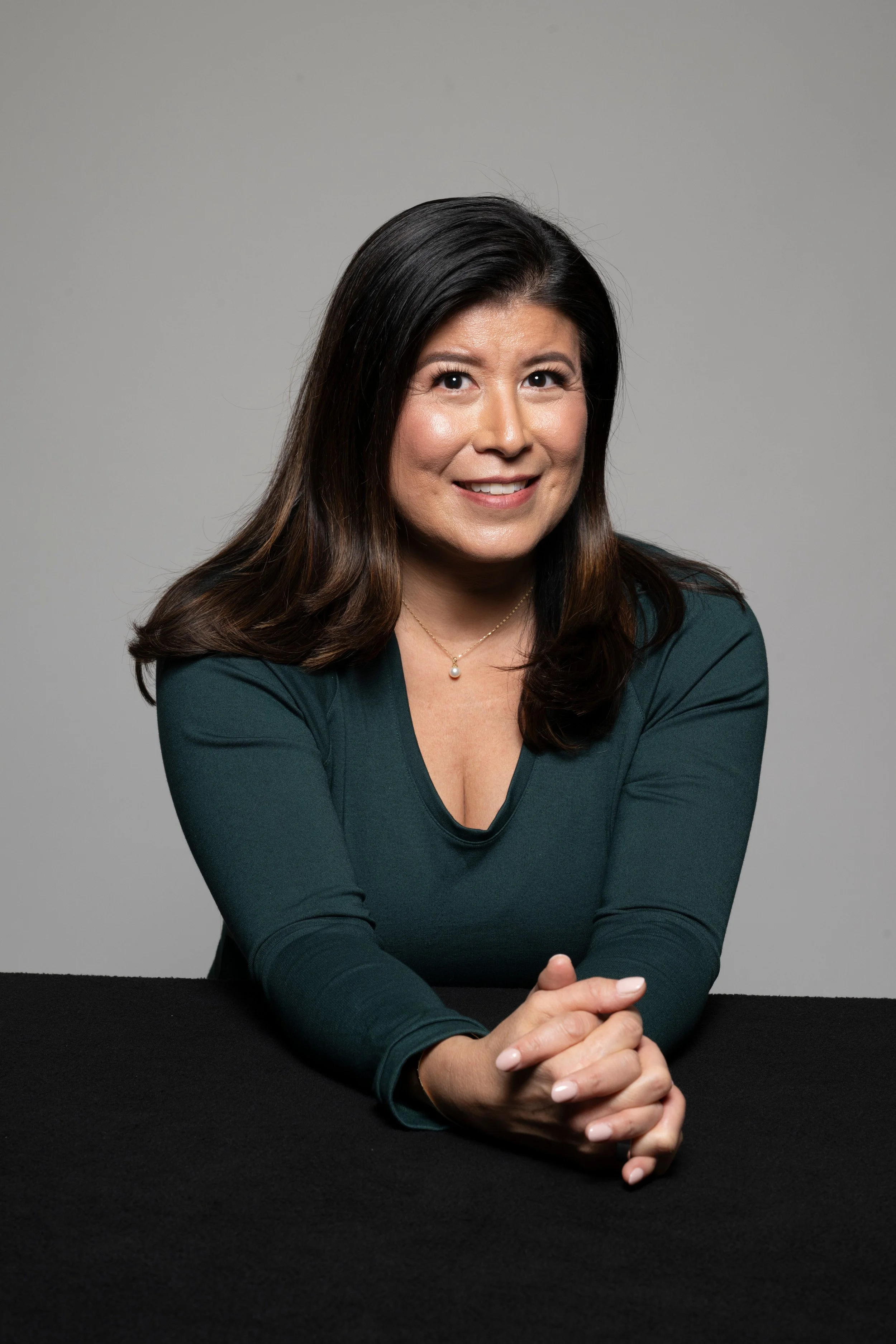
Sara Kehaulani Goo is a journalist and senior news executive who has led several national news organizations including Axios, NPR and The Washington Post. She is now serving as President of the WP Creator network at The Washington Post, a new business outside the newsroom focused on content partnerships with independent creators. She formerly served as editor-in-chief at Axios, where she launched the company’s editorial expansion into national and local newsletters, podcasts and live journalism. Before Axios, she led online audience growth as a managing editor at NPR, overseeing the newsroom's digital news operation. Goo started her career as a reporter for The Washington Post and The Wall Street Journal.